English as the language of instruction, Italian as the language of Ticino, German from beginner to advanced — with CEFR-based placement for every student.
- English as the language of instruction across all subjects
- Italian for fluency in formal and everyday language
- German at varying levels, beginner to advanced
- CEFR-based placement test on joining
Bilingual Education in Lugano: English, Italian and German
English as the language of instruction, Italian as the language of Ticino, German at every level — with CEFR-based placement so each student joins the right class.
Three languages, one programme
Our Language Programme creates a multilingual environment where students can thrive — mastering English as the language of instruction, Italian as the language of the region, and German as one of Switzerland’s official languages.
The core languages
English
The primary language of instruction. We emphasise academic English — reading, writing, speaking and listening across all subjects.
Italian
The language of Ticino, and a vital part of the curriculum. Students gain fluency in both formal and everyday Italian, enriching their connection to the region.
German
One of Switzerland’s official languages, offered at varying levels from beginner to advanced — for confident communication in academic and social contexts.
How placement works
Language courses follow the Common European Framework of Reference (CEFR), so every student works at the level that fits.
Assessment on joining
New students are tested in their chosen language or languages to assess their skill level.
Placement by proficiency
Students join classes with others at a similar level — so teachers can provide tailored support.
Progress through the levels
The CEFR structure lets students move up efficiently as their proficiency grows.
The CEFR levels at a glance
| Level | Band | What it means |
|---|---|---|
| A1–A2 | Basic user | Everyday expressions and simple interaction |
| B1–B2 | Independent user | Confident use at school and in daily life |
| C1–C2 | Proficient user | Fluent, precise use in academic contexts |
The framework of the Council of Europe. Which levels are offered in each language is confirmed at placement.
Where the languages live
Bilingual learning starts in the Primary School; the Bridge Programme adds intensive language learning for students joining with less English or Italian.
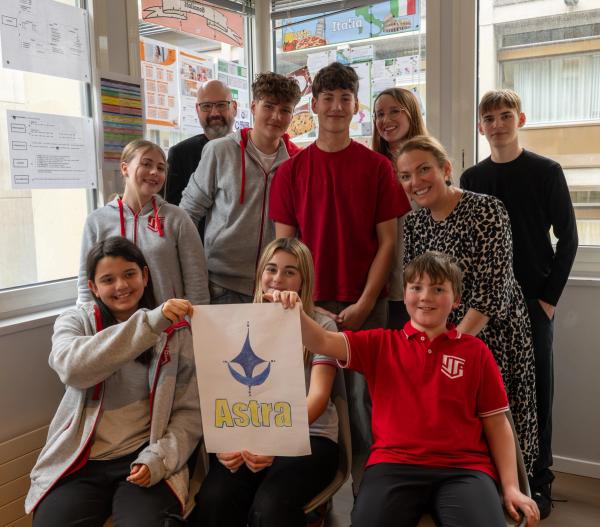 Our Primary School
Our Primary School inspires young learners to become curious, creative and independent thinkers — inquiry-based, bilingual, guided by the K.I.N.D. framework.
- Bridge Program
Questions families ask about bilingual schooling
What is a bilingual school — and is ISS one?
At ISS, lessons are taught in English and Italian: English as the language of instruction, Italian as the language of the region. That is bilingual education in practice — two languages carrying real learning, not one language taught as a subject.
What are CEFR levels?
The Common European Framework of Reference describes language ability in six levels, from A1 (beginner) to C2 (mastery). Our language classes are organised along this framework, and students are placed by level, not by age alone.
My child speaks little Italian or English — can they still join?
Yes. Placement starts with an assessment, classes are set by proficiency, and the Bridge Programme offers intensive language learning for students who need a stronger start.