Bilingual Education in Lugano: English, Italian and German
English as the language of instruction, Italian taught from Grade 1 as the language of Ticino, German from Grade 3 as a national language of Switzerland.
Three languages, one programme
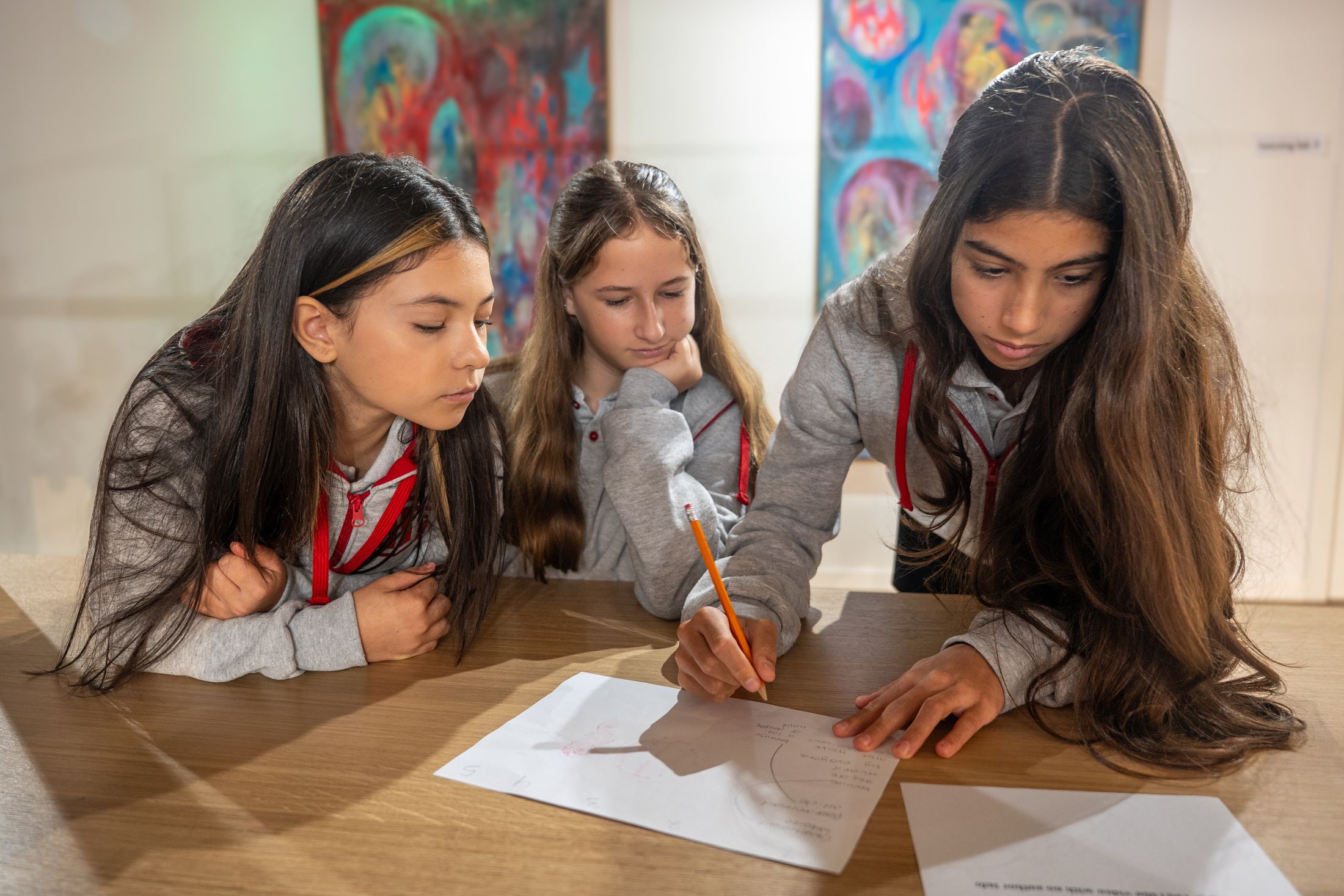
Our Language Programme creates a multilingual environment where students can thrive — mastering English as the language of instruction, Italian as the language of the region, and German as one of Switzerland’s official languages.
The core languages
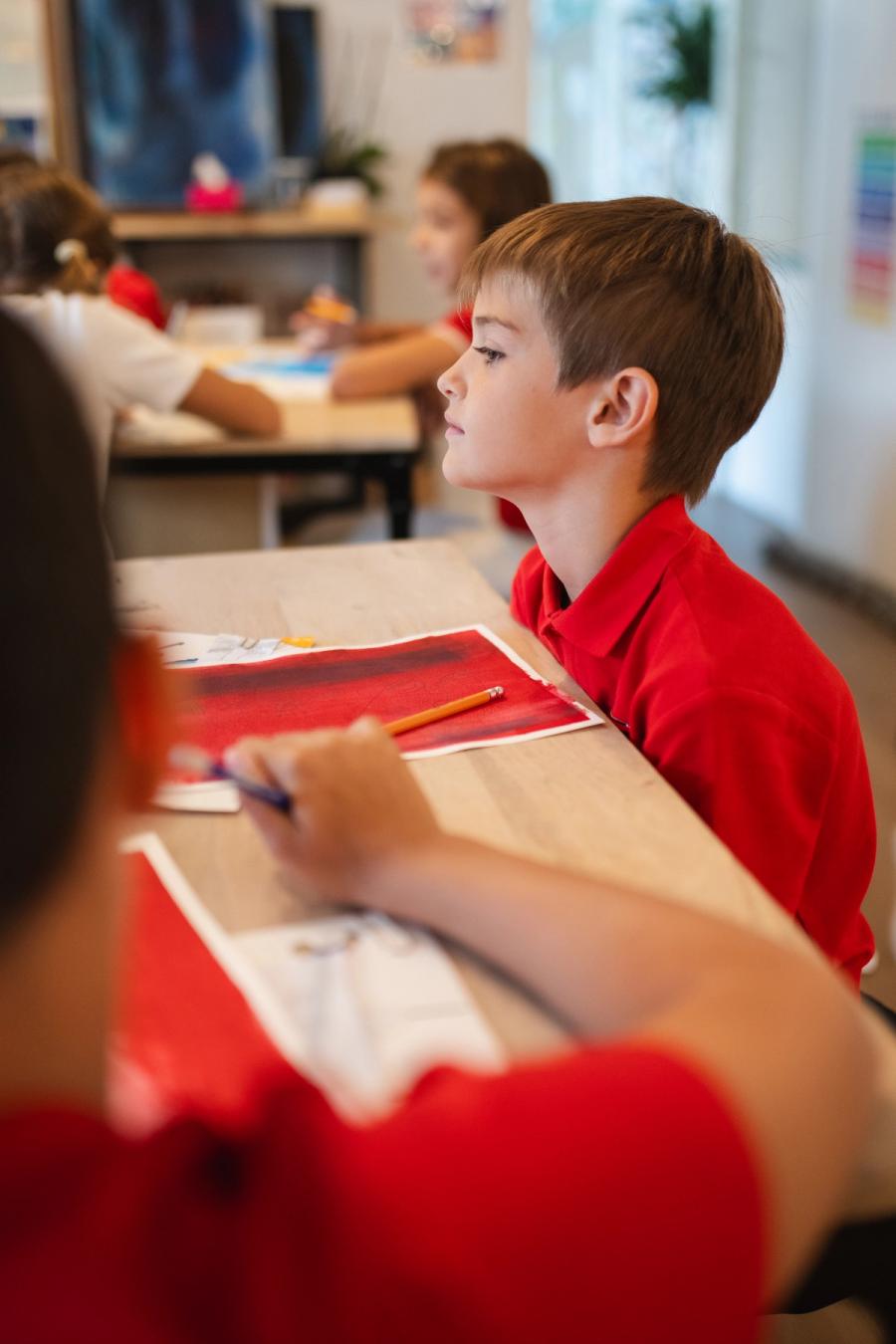
English
The primary language of instruction. We emphasise academic English — reading, writing, speaking and listening across all subjects.
Italian
The language of Ticino, and a vital part of the curriculum. Students gain fluency in both formal and everyday Italian, enriching their connection to the region.
German
One of Switzerland’s official languages, from Grade 3 — in specialist lessons in the Primary School, as an elective in the Discovery Programme in the Middle School with preparation for the Goethe exams, and as German A, German B or Pearson International German in the Senior School.
Why these three languages
Switzerland has four national languages, written into Article 4 of its constitution. According to the Federal Department of Foreign Affairs, about 62 per cent of the population speak German or Swiss German as their main language, 23 per cent French, 8 per cent Italian and half a per cent Romansh. Italian is the language of Ticino, where the school stands. German is the language of most of the country and of its largest universities.
For a family in Lugano that means three practical needs at once: English for an international education and universities abroad, Italian for daily life and for any move into the local system, and German for the rest of Switzerland, where most careers and most Swiss universities are. The programme is built around exactly these three, with Italian starting in Grade 1 rather than later and German from Grade 3.
How placement works
Language courses follow the Common European Framework of Reference (CEFR), so every student works at the level that fits.
Assessment on joining
New students are tested in their chosen language or languages to assess their skill level.
Placement by proficiency
Students join classes with others at a similar level — so teachers can provide tailored support.
Progress through the levels
The CEFR structure lets students move up efficiently as their proficiency grows.
How long a level takes
As a rule of thumb, Cambridge English puts the step from one level to the next at roughly 200 hours of guided learning: about 350 to 400 hours from zero to B1, 500 to 600 to B2, 700 to 800 to C1. Those figures describe lessons and supervised study.
A child in a school where the language is spoken all day gets far more than the lessons: instructions, friends, the corridor, Discovery. That is why placement by level matters more than age, and why the level at which a child starts says little about where they will be in two years.
Where the languages live
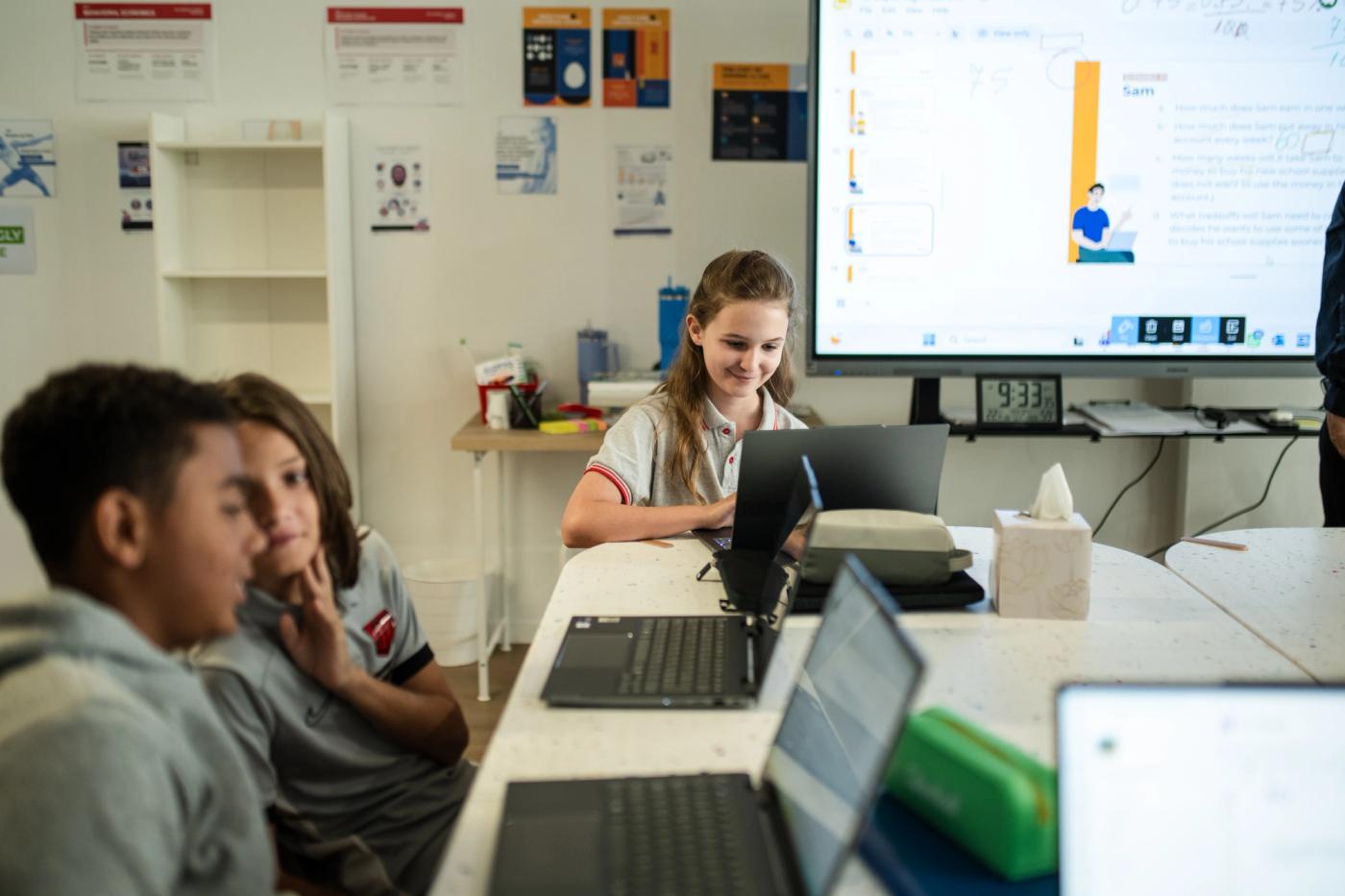
Bilingual learning starts in the Primary School; the Bridge Programme adds intensive language learning for students joining with less English or Italian.
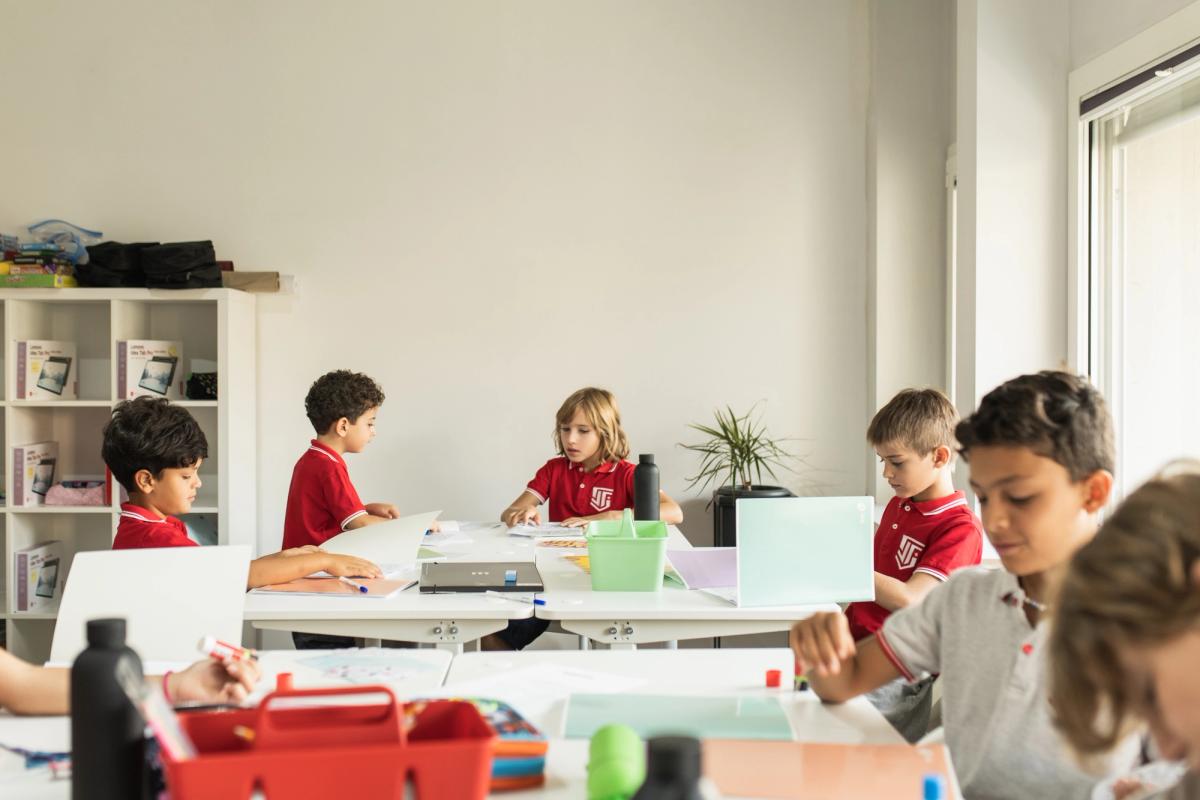

Hear the languages in the corridors
Visit the school and experience the multilingual environment first-hand.
Details and questions
- English as the language of instruction across all subjects
- Italian for fluency in formal and everyday language
- German from Grade 3 through to the diploma years
- CEFR-based placement test on joining
The languages at a glance
| Language | Role at ISS | Who and from when |
|---|---|---|
| English | Language of instruction across all subjects | Every student, Grade 1 to Grade 12; English as an Additional Language support for those who need it |
| Italian | Language of Ticino, taught alongside English | From Grade 1; classes placed by level |
| German | National language of Switzerland | From Grade 3: specialist lessons in the Primary School; an elective in the Discovery Programme in the Middle School, at levels A1/A2 and B1/B2, preparing for the Goethe exams; German A or German B in the IB Diploma Programme, or Pearson International German at A-Level |
| French | Intensive option within the Bridge Programme | Students aged 12 to 18 in the Bridge Programme |
| Placement | Common European Framework of Reference, A1 to C2 | Assessed on joining, in each language; students move up as levels are reached |
Details of hours and certificates are confirmed at enrolment.
The CEFR levels at a glance
| Level | Band | What it means |
|---|---|---|
| A1–A2 | Basic user | Everyday expressions and simple interaction |
| B1–B2 | Independent user | Confident use at school and in daily life |
| C1–C2 | Proficient user | Fluent, precise use in academic contexts |
The framework of the Council of Europe. Which levels are offered in each language is confirmed at placement.
Questions families ask about bilingual schooling
What is a bilingual school, and is ISS one?
A bilingual school teaches in two languages rather than teaching one language as a subject. At ISS, English is the language of instruction and Italian is taught alongside it from Grade 1, so both carry real learning. German is added from Grade 3.
Bilingual school or international school: what is the difference?
An international school teaches in English to families who may move again and follows an international curriculum; a bilingual school teaches in the local language and English. ISS does both: English-medium instruction with an international path to A-Levels or the IB Diploma, and Italian from the first year.
What are CEFR levels?
The Common European Framework of Reference describes language ability in six levels, from A1 (beginner) to C2 (mastery). Our language classes are organised along this framework, and students are placed by level, not by age alone.
Which CEFR level counts as fluent?
B2 is the level at which a student follows lessons, reads a text and holds a conversation without help; the framework calls it independent. C1 and C2 are the proficient levels, close to an educated native speaker. Conversational ability for daily life starts around B1.
How does the language placement work?
On joining, a student is assessed in each language and placed in a class with others at a similar level. Teachers can then support precisely, and students move up as a level is reached. The placement is reviewed, not fixed for the year.
My child speaks little Italian or English. Can they still join?
Yes. Placement starts with the assessment, classes are set by level, and students who need it receive English as an Additional Language support. For students aged 12 to 18 who need a stronger start, the Bridge Programme offers a year of intensive language learning.
Is German compulsory?
German starts in Grade 3, taught in specialist lessons in the Primary School. In the Middle School it is an elective in the Discovery Programme, at levels A1/A2 and B1/B2, preparing for the Goethe exams. In the Senior School students can take German A or German B in the IB Diploma Programme, or Pearson International German at A-Level. Whether it is compulsory in a given grade is confirmed at enrolment.
How many language lessons are there each week?
The number of lessons per language and grade is set in the timetable for each year and given at enrolment. Because English is the language of instruction, a student is in English all day, not only in English lessons.
What about our home language, if it is not one of the three?
The taught languages are English, Italian and German, with French in the Bridge Programme. The school does not publish a separate mother-tongue programme; tell admissions which languages your child speaks at home and they will say what is possible.
Can a child from a Ticino public school join without English?
Yes. The assessment shows where their English starts, English as an Additional Language support runs alongside the timetable, and Italian, their strong language, continues from day one. Age, languages and school record are looked at together in the admissions conversation.