Our Primary School in Lugano, Ticino
Grades 1 to 5, from age five. Taught in English with Italian alongside and German from Grade 3, through inquiry-based learning in six units a year.
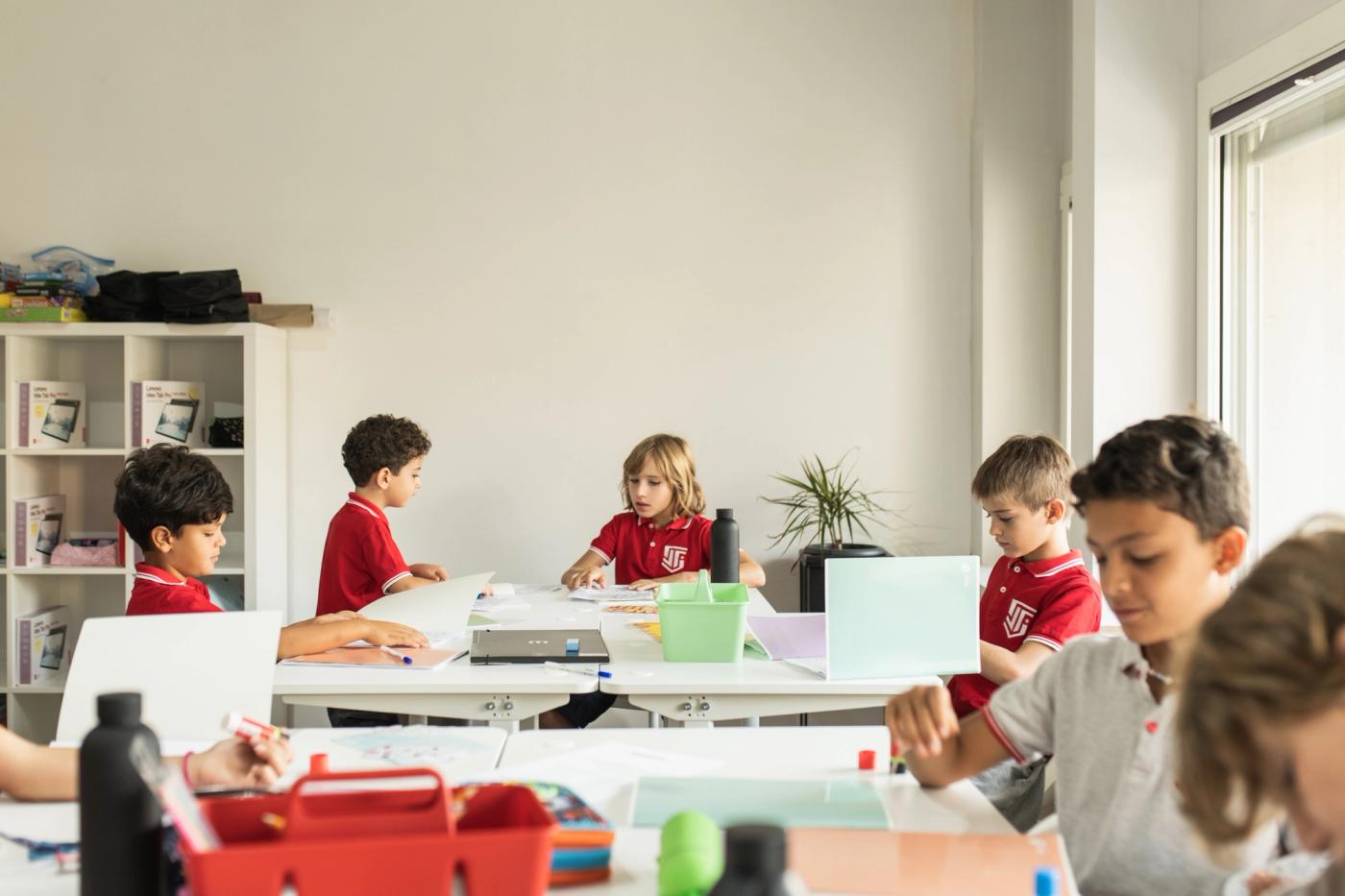
Laying the foundation for lifelong learning
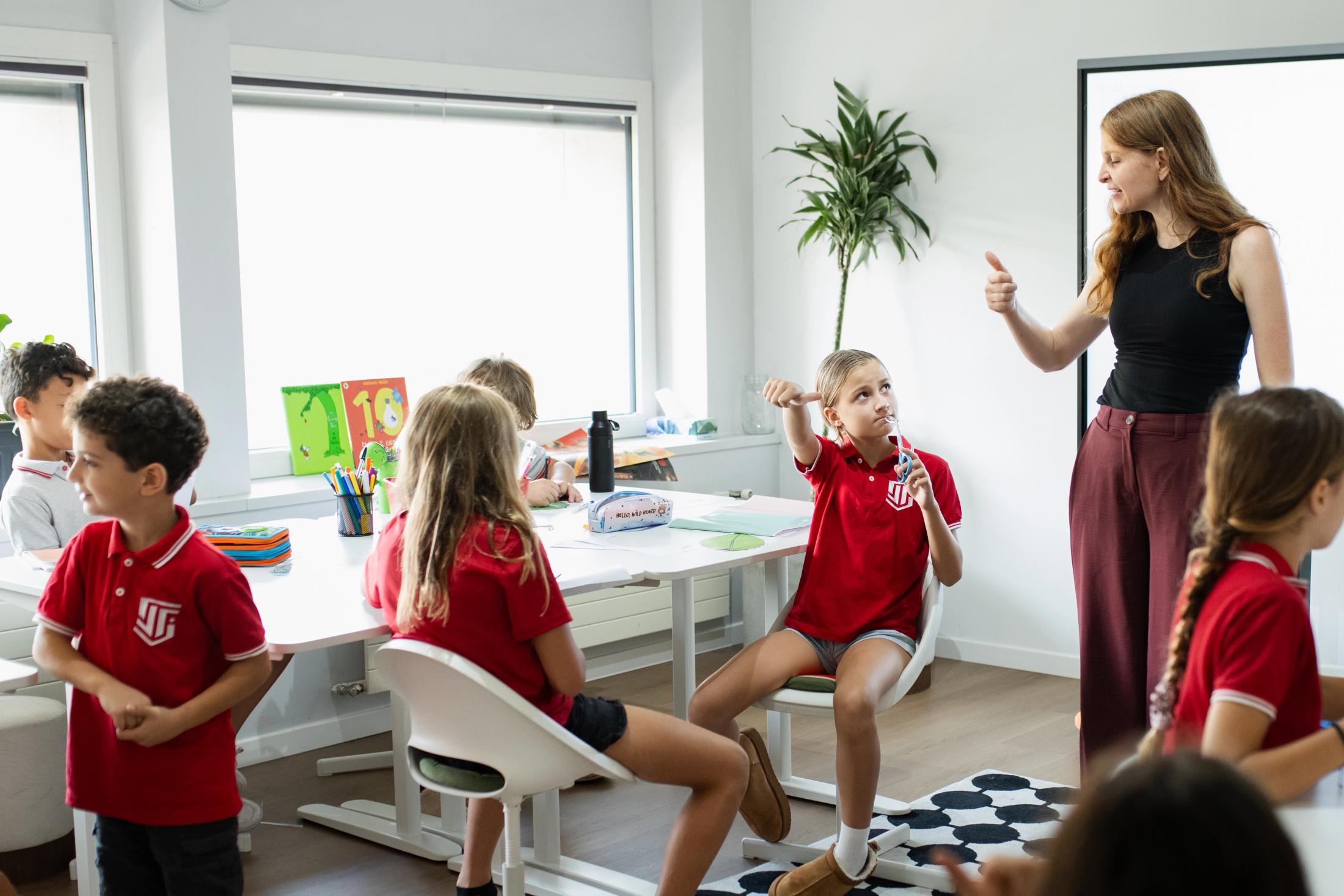
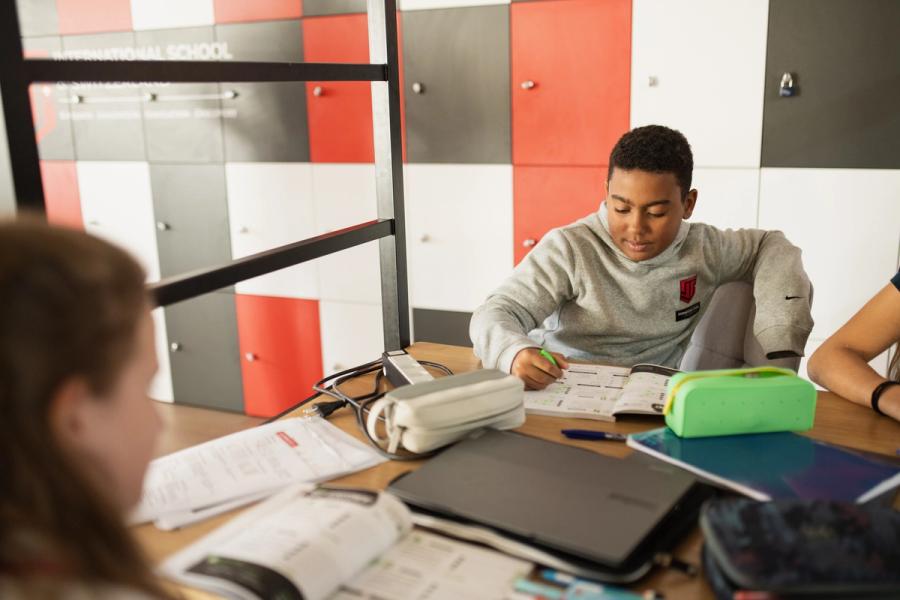
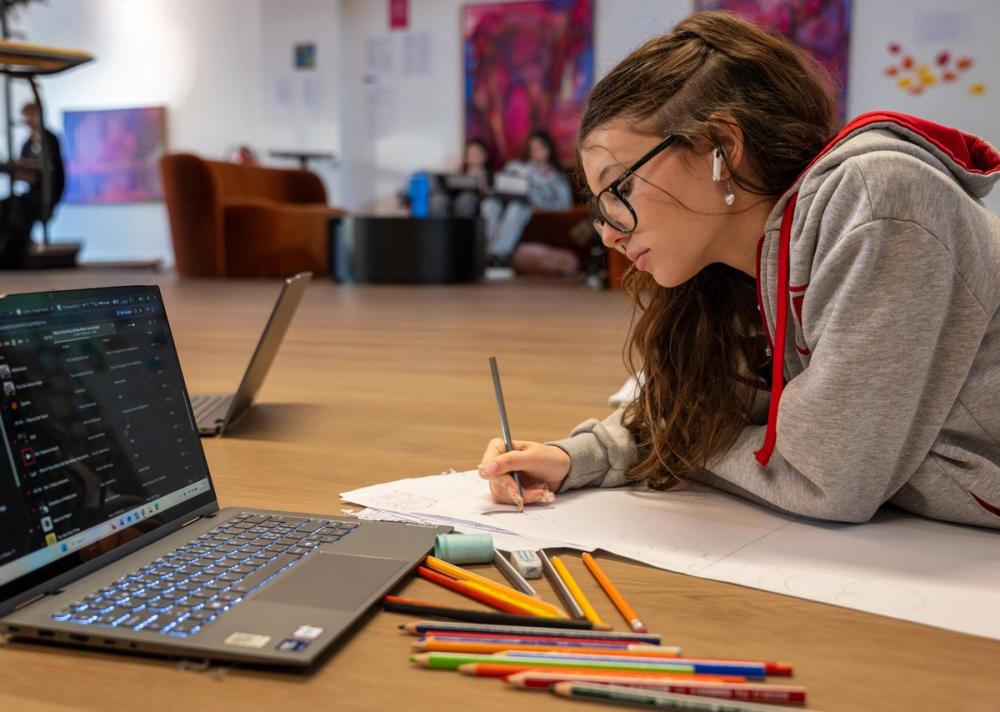
At the heart of our Primary School is inquiry-based learning: students actively explore concepts, questions and challenges that are relevant to their lives, and learn to ask questions rather than memorise answers.
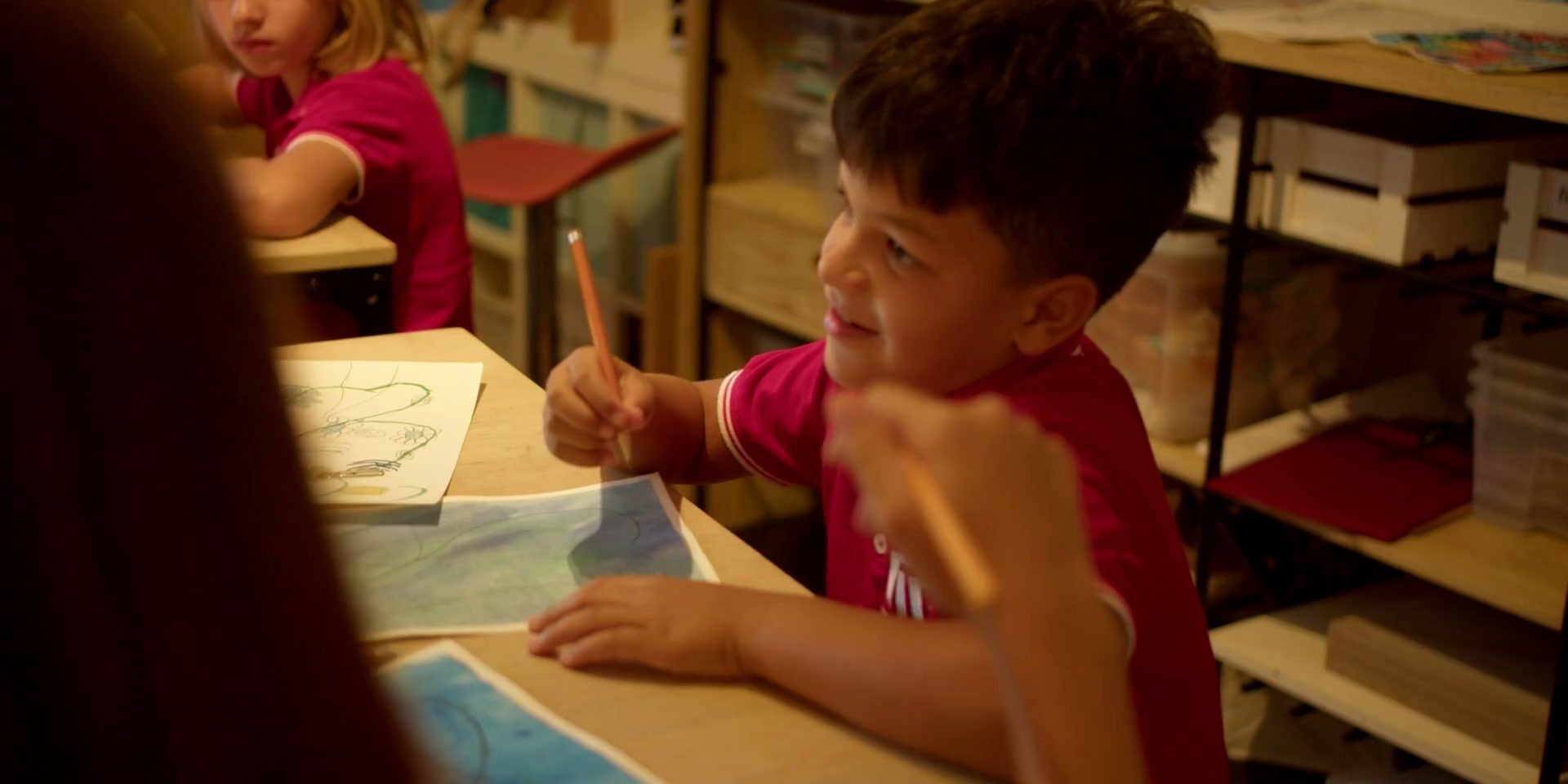
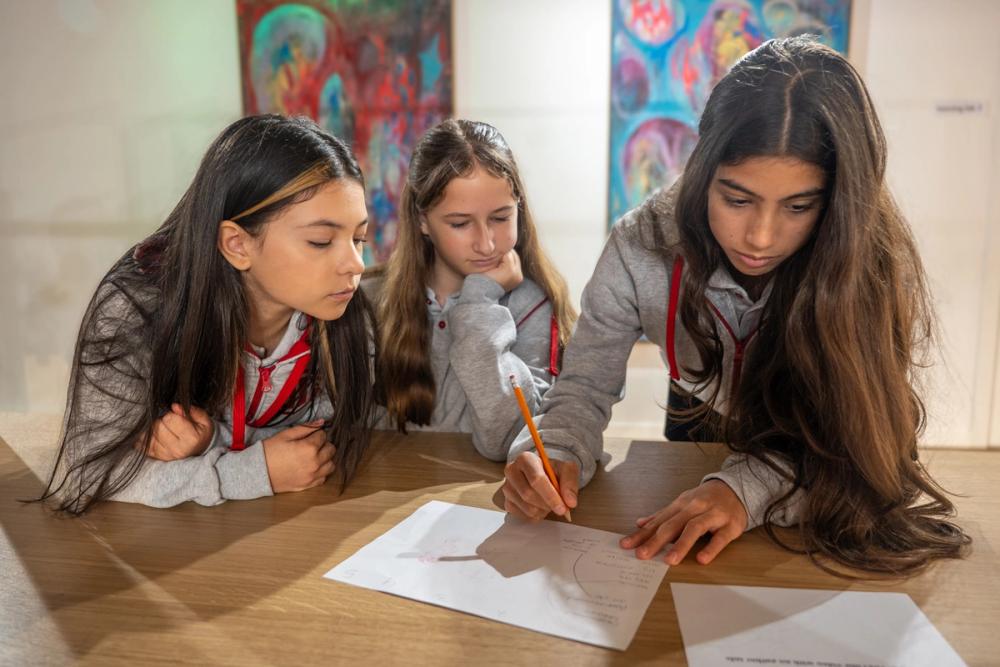
Learning is transdisciplinary — students make connections across subjects, so what they learn is holistic and integrated. Through six inquiry units each year, they delve into real-world topics that engage their natural curiosity, and each unit culminates in a final project or presentation shared with the school community.
Four concepts that frame every unit
Each inquiry unit is framed by key concepts that promote deeper understanding — students do not just learn facts, they learn to think.
Form
Function
Connection
Perspective
Two languages of instruction — and a third to grow into
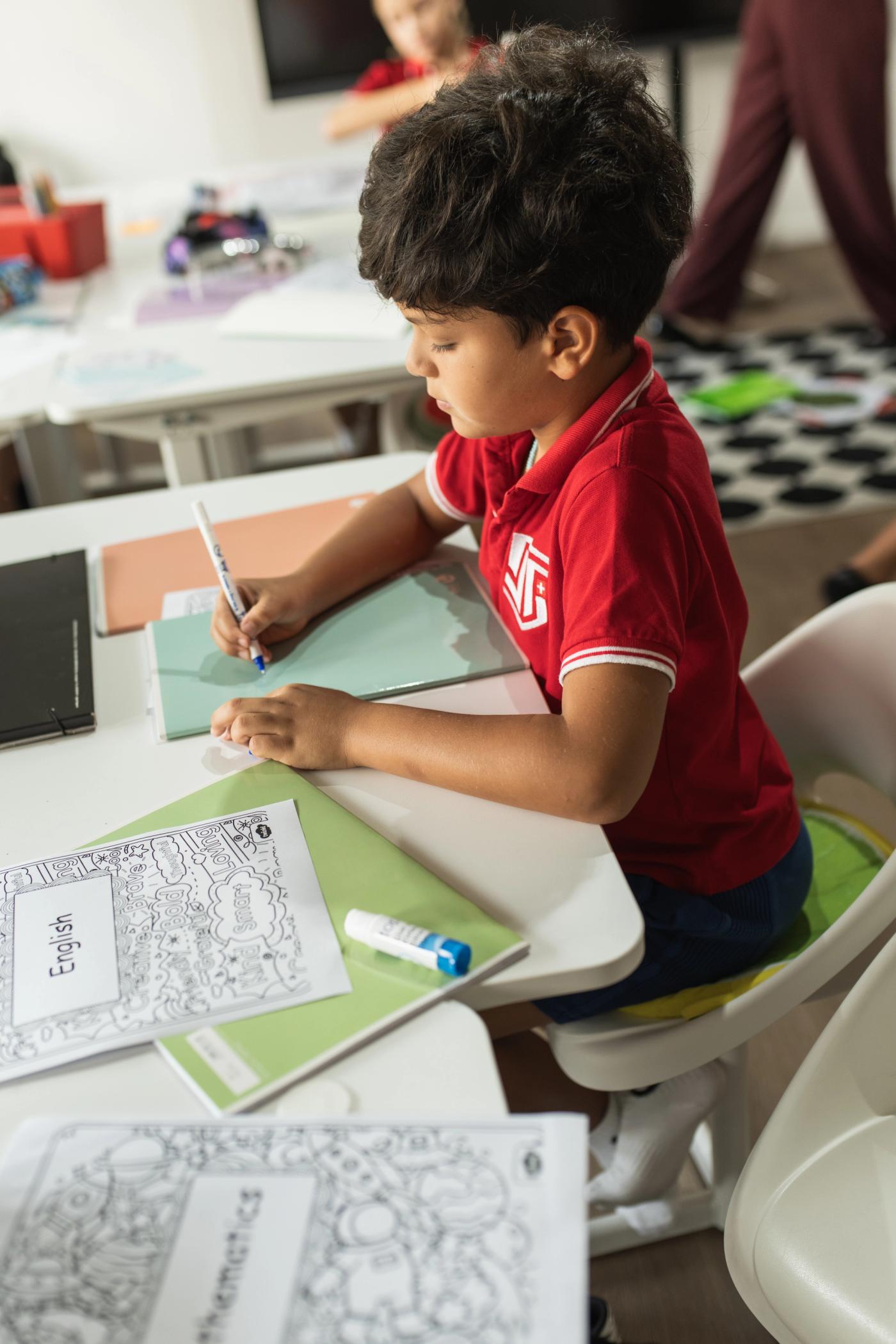
Given our location in Ticino, learning happens in a multilingual environment, with English and Italian as the primary languages of instruction from an early age.
- English is integrated across all subjects, building strong literacy and communication skills in an international context.
- Italian is taught alongside English, connecting students with the community and culture of Ticino.
- German starts in Grade 3, taught in specialist lessons, further enriching students’ linguistic capabilities.
How our Primary School maps onto the Ticino system
In Ticino, children enter the scuola dell'infanzia at four, the scuola elementare at six for five years, and the scuola media at eleven for four years, as the federal education portal sets out. In age, Grade 1 at ISS corresponds to the first year of the scuola elementare and Grade 5 to its last; our Middle School begins with Grade 6 where the scuola media begins.
The difference is the language. Public schools in the canton teach in Italian; at ISS the language of instruction is English, with Italian taught from the start so that a child growing up here keeps the language of the place. The language programme explains how the three languages are taught across the school.
What the primary years cultivate
The primary years shape attitudes, habits and skills — so alongside academics, our programme is designed to develop:
Curiosity
Encouraging a natural desire to explore and learn.
Independence
Building confidence through taking responsibility for one’s own learning.
Collaboration
Working together and valuing diverse perspectives.
Resilience
Facing challenges and bouncing back from setbacks.
International School of Switzerland is a candidate school* for the PYP. This school is pursuing authorization as an IB World School. IB World Schools share a common philosophy- a commitment to high-quality, challenging, international education- that we believe is important for our students.
* Only schools authorized by the IB Organization can offer any of its four academic programmes: the Primary Years Programme (PYP), the Middle Years Programme (MYP), the Diploma Programme (DP), or the Career-related Programme (CP). Candidate status gives no guarantee that authorization will be granted. For further information about the IB and its programmes, visit www.ibo.org.
Related downloads
- Year Level Comparison List
How ISS grades map to other school systems — for families comparing year levels.
See the Primary School in action
The best way to understand inquiry-based learning is to watch it happen. Visit a classroom, meet the teachers, bring your child.
Details and questions
- Age range
- 5–11 years
- Year groups
- Grades 1–5
- Qualification
- IB PYP candidate school
- Inquiry-based learning, six units a year
- English with Italian alongside, German from Grade 3
- Discovery included in tuition
- Laptop provided by the school
The Primary School at a glance
| Grades | 1 to 5. The school starts at Grade 1; there is no earlier year group at the moment. |
| Starting age | Five for Grade 1. Where a child is placed is agreed in the admissions conversation. |
| Languages | English as the language of instruction, Italian taught alongside, German from Grade 3 in specialist lessons. |
| Approach | Inquiry-based learning, six transdisciplinary units a year, each ending in a project shared with the school community. |
| Discovery | Woven through the school day, included in tuition. |
| Devices | The school provides each student's laptop. |
| Tuition 2026/27 | Grade 1 CHF 16,000 a year; Grades 2 to 5 CHF 18,000. One-off enrolment fee of CHF 3,000 per family. |
| School year 2026/27 | Monday 31 August 2026 to Wednesday 16 June 2027. |
Details on the fees and calendar pages.
What a unit of inquiry looks like
Six units across a school year means each one runs for roughly six weeks. A unit starts from a central idea that is large enough to hold several subjects, for example how living things depend on their surroundings, and from the questions the children themselves bring to it. The teacher plans reading, writing, mathematics, science and art so that they feed the same question rather than sitting in separate boxes.
Four concepts give the children a way of looking at any topic. Form asks what something is like. Function asks how it works. Connection asks how it is linked to other things. Perspective asks whose point of view we are taking. A child who has used these four lenses on volcanoes, on a local river and on a story can use them on anything that comes later.
Every unit ends with a project or presentation that the children share with the school community. That is where the learning becomes visible: to the child, to the class and to the parents who come to see it.
The K.I.N.D. Framework in the primary years
Our approach to teaching and learning is rooted in the K.I.N.D. pedagogical framework — Kindness, Innovation, Navigation and Discovery:
- Kindness: a compassionate environment where students support each other and respect diversity.
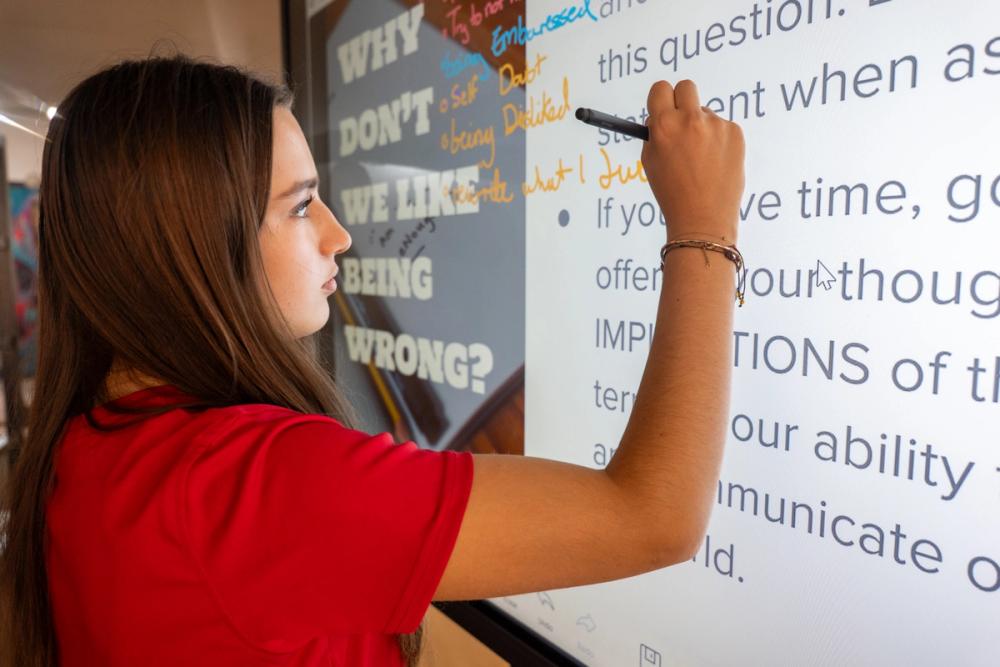
- Innovation: creative thinking, problem-solving, and technology used to solve real-world challenges.
- Navigation: structured learning pathways that give students strong foundations and ownership of their learning journey.
- Discovery: exploring passions, fostering a love of learning and an intrinsic drive to engage with new ideas.
DISCOVERY: learning beyond the classroom
The DISCOVERY co-curricular programme is an integral part of the Primary School experience — designed to ignite passion, foster creativity and make real-world connections that deepen learning.
Immersion days take students outside the classroom into practical experiences linked to their inquiry units — a field trip, a visit to a local business, or community service.
Activities range from creative arts to STEM, so students explore new interests and grow their social and emotional intelligence in real-world contexts.
A partnership with parents
Parents play a crucial role in a child’s education, especially in the primary years. We keep communication strong: regular updates on progress, and real opportunities for parents to be involved in school life — so each child’s learning journey is supported at school and at home.
Questions families ask
At what age can my child join the Primary School?
Children join Grade 1 at age five. There is no earlier year group at the moment. Where a child fits best is part of the admissions conversation.
How long is primary school in Switzerland?
In Ticino the scuola elementare lasts five years, from age six to eleven, after two years of scuola dell'infanzia. At ISS the Primary School runs from Grade 1 to Grade 5 and starts at age five, a year earlier, followed by the Middle School from Grade 6.
Is primary school free in Switzerland?
Public schools are free and teach in Italian. ISS is a private school: tuition for 2026/27 is CHF 16,000 for Grade 1 and CHF 18,000 for Grades 2 to 5, plus a one-off enrolment fee of CHF 3,000 per family. The fees page has the full table.
What are the school hours?
The school day runs from 08:30 to 16:00, with Discovery woven through it as part of the programme rather than an optional extra. The timetable for the current year is given at enrolment and confirmed by admissions.
What does inquiry-based learning look like in the classroom?
Six units a year, each built around a real-world topic and the children's own questions, framed by the concepts of form, function, connection and perspective. Reading, writing, mathematics and science are taught through the unit rather than beside it. Every unit ends with a project or presentation the children share with the school community.
Inquiry-based learning or Montessori: what is the difference?
Both put the child's curiosity first. Montessori works through a prepared environment of materials that children choose from, often in mixed-age groups. Inquiry-based learning works through units that the teacher frames around a central idea, with the class investigating together and in groups, and ending in something the children make or present. ISS follows the inquiry approach within its K.I.N.D. Framework.
Bilingual school or international school: which is ISS?
Both, in a specific way. An international school teaches in English to families who may move again; a bilingual school teaches in two languages, usually the local one and English. At ISS the language of instruction is English, Italian is taught alongside from Grade 1, and German is added from Grade 3.
My child does not speak English yet. Can they start?
Tell us the languages your child speaks and their age, and admissions will say what is possible. Language and placement are looked at together in the admissions conversation, not decided from a form.
How big are the classes?
The school keeps its classes small. Current numbers for each grade change with the year and are given by admissions on request.
Which languages will my child learn?
English as the language of instruction, Italian taught alongside it, and German from Grade 3 in specialist lessons.
How can we see the Primary School?
Visit during term time and watch a class at work; bring your child. The visit page explains how to arrange it.